Tuesday, 30 August 2016

Chasing a Dream

September 1st marks the 146th anniversary of the Battle Of Sedan, an event that crushed the belief of France's glittering Second Empire that it was the major power in Europe. It's a matter of debate among historians whether the war was engineered by the powerful Prussian chancellor, Bismarck, or whether he simply took advantage of the situation when France challenged Prussia over a diplomatic incident involving Spain. 
At Sedan the victorious German federation, led by Prussia, defeated the armies of France in a mere six weeks. The blow to France's pride was as great as that dealt by Wellington and his allies in the much more famous Battle of Waterloo 55 years previously.
Emperor Napoleon III, nephew of Napoleon Bonaparte, fled into exile in England and a new Republican government was left to struggle through the terrible winter of the Siege of Paris before admitting defeat and surrendering the city to the Prussians. The French were forced to sign a humiliating peace treaty in the Galerie de Glaces at Versailles, where once the Sun King had reigned in splendour.
The story of the war plays an important part in my coming-of-age novel, City of Dreams. Anna, my heroine, has come to Paris from Russia on her marriage to dashing Frenchman, Emile Daubigny, looking forward to a happy and exciting life in the city she has dreamt of being part of, but fate has something else in store. As Paris fights for her life, Anna has to struggle with her own demons, always hoping for better times for herself and the city she loves.
City of Dreams is currently free on Kindle, to download your copy, click on the cover image to your right.
'Loved the story and the author's voice - really enjoyable.' 5* Amazon reviewer, Monette.
'It was a great, great read.' 5* Amazon reviewer, Dr Milton Burnett.    
Harriet Steel's latest novel, the murder mystery, Trouble in Nuala, is just out on Kindle and in paperback from Amazon. Recommended by Omnimystery News, it's a great read. Look for the purchase and Goodreads Giveaway links in the right-hand sidebar. There are  five signed paperback copies to be won.

Tuesday, 23 August 2016

Never Judge a Book by its Cover?


It's a piece of advice that 's been around for a long time, but is it true? These days when people have less and less time and tend to make quick decisions about what they want to read, the cover of that book you've spent so many hours lovingly crafting has become a vital marketing tool and, however much you love the writing process itself, a book that has no readers is a sad lost opportunity.
 
When I get to the stage of thinking about a cover for a new book, the first thing I like to do is create a mood board. That may sound pretentious, but  it really is worthwhile and actually very simple. Just spend a little time looking at covers for books in your genre to see what appeals to your eye. Think about the atmosphere your book creates and the world it evokes. Is it a gritty crime novel or a fantasy saga? An historical romp or a poignant romance?
 
Unless you're a technical wizard in the graphic design department, I can't stress too highly the importance of finding yourself a really great designer. That way you shouldn't make beginner's mistakes like having text that's hard for potential readers to decipher in Amazon thumbnails or using poor quality images.
 
My new murder mystery is set in Ceylon (now Sri Lanka) in the 1930s. I was lucky enough to spend some time in the country last winter and found it an inspiring experience. In essence the book is a light-hearted, relaxing read, reflecting the colourful nature of the country in which it's set. (If you like your murder mysteries dark with alcoholic detectives who have broken marriages then I doubt it will be for you!) I wanted a colourful, fun cover to reflect the mood so, with that in mind, I started to collect images. Some of these helped me to decide the basic colours for my cover, others expressed the fun.
 
It took a few conferences with my wonderful, and very patient, designer before I felt we'd achieved exactly what I wanted but now I believe I have the perfect cover for the book. Here it is with a few of the images that inspired it.


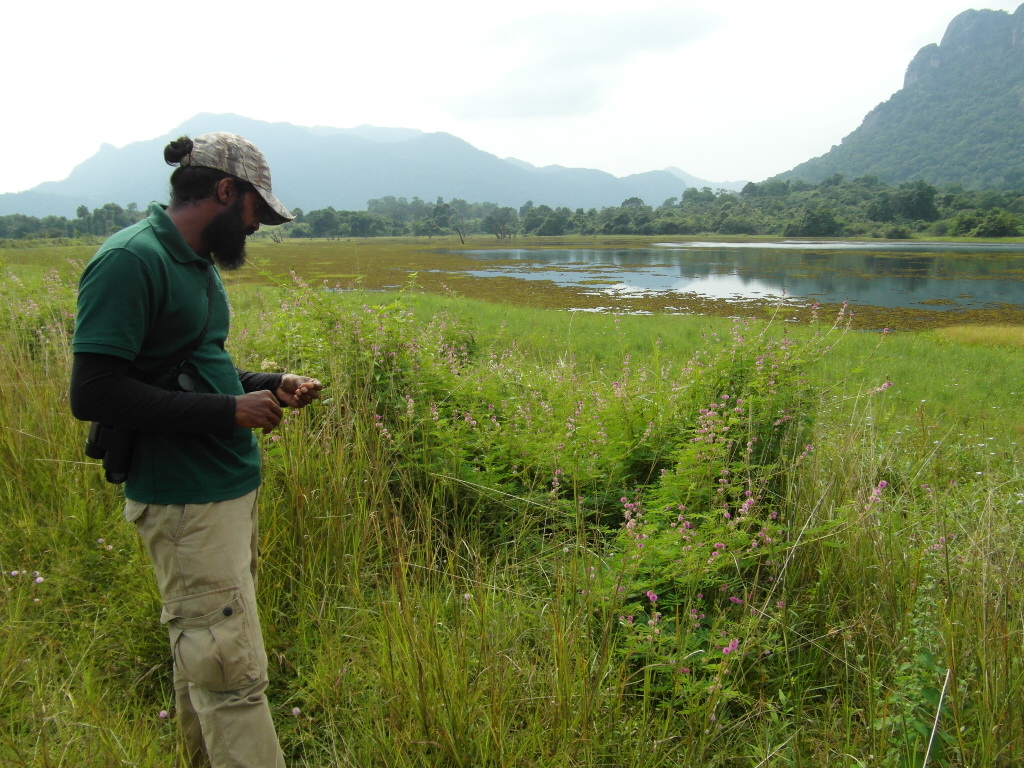
Vibrant green on a walk to a lake 

More green in the paddy fields. This was telling me something!
One of many wonderful sunsets
And lastly - the fun element!


The cover for Trouble in Nuala was designed by JD Smith Design (www.jdsmith-design.com/)
 
Trouble in Nuala is available in Kindle or paperback from Amazon - find out more and buy your copy by clicking on the cover image in the right-hand sidebar above, or follow the short link viewBook.at/Nuala


Friday, 8 July 2016

Don't let the Facts Spoil a Good Story.

At the moment, UK politics resembles Shakespearean drama more each  day. A by-product of this has been the discussion of Boris Johnson's father's comment on his son's political assassination - those famous words from Julius Caesar,  'Et tu, Brute?' 
Several commentators have been quick to point out that according to the chronicler, Suetonius, Caesar probably said 'Kai su, Teknon?' - Ancient Greek for 'You too, my son?' Plutarch adds the words 'So fall Caesar'.
Shakespeare would obviously have been keen to choose the most dramatic and succinct line. 'Et tu, Brute' is certainly memorable and even though many educated people of his day would have swapped between Greek and Latin easily, it would have been more likely to be widely understood.
Of course we'll never know the truth. Maybe as one wag recently suggested, Caesar's last word is far more likely to have been 'arrrrgh!'


If you love a good mystery set in the Golden Age of Shakespeare, my novel Salvation is on Kindle Countdown until 15th July.


Friday, 17 June 2016

A not so Bleak House

It was a great treat to visit Charles Dickens' home at Bleak House in Broadstairs,  Kent this week. The house was formerly called Fort House and occupies a position on the headland overlooking Viking Bay.

Bleak House in Broadstairs where Dickens finished writing David Copperfield

In Dickens' time the house was surrounded by cornfields where birds and butterflies abounded. He described it as 'my airy nest' and when he wasn't writing, loved to go for long walks on the cliffs. Inevitably the area around Bleak House is now built up but the front windows still command wonderful views. A truly inspiring place.  


Tuesday, 24 May 2016

The Girl-less, Cuss-less Telephone

A hundred and four years ago this month, the small town of Epsom in Surrey in the United Kingdom made history as the first place in the UK to use an automatic telephone exchange.
 
 
Luckily for Epsom, this was a free trial or the cost would have been astronomical. As it was, three hundred and fifty homeowners signed up for the privilege of dialling direct the numbers they wanted to reach, rather than having to wait for the operator to connect them.
The equipment had been patented by an American inventor, Almon Strowger who opened his first exchange in Indiana with seventy-five subscribers. He advertised it as "the girl-less, cuss-less, out-of-order-less, wait-less telephone" because you no longer had to wait to be connected by the operators (almost invariably women) at the central hub.
 
 
Epsom was chosen as it was considered to be a typical suburban neighbourhood. The system was finally adopted as standard in 1922. It changed the way we communicated forever, and in its day was probably as much of a revelation to people using it as the mobile is to us. 

Saturday, 7 May 2016

Echos of History

Readers often ask what inspires my novels. I've written elsewhere about the inspiration I've found in Impressionist paintings so here, I want to say something about the political situation that caught my imagination and led me to write City of Dreams.


Many writers of historical fiction are drawn to the medieval or Elizabethan periods, both fascinating, but in City of Dreams I wanted to explore a period that is less well known.
 
I wove the story of Anna, a Russian girl who comes to Paris with her new husband, into the history of that city in the second half of the nineteenth century. I wanted to explore a period that is not so familiar to most people but nevertheless extremely interesting. 
 
For many years Paris was the most fashionable and envied city on earth, but in 1870, diplomatic wrangling over rival influences in Spain catapulted France into the Franco-Prussian war. It was a war that France never expected to lose and the consequences of defeat were dramatic.


Emperor Napoleon III (Napoleon Bonaparte's nephew) went into exile, leaving a shaky government that had to pilot Paris through a terrible siege and then a struggle for power with the leaders of the Commune, the political movement that foreshadowed the advent of Communism in the 20th century.
 
The historical importance of the struggle is best encapsulated for me by the fact that when the first three-man team of Soviet cosmonauts went up in Voskhod in 1964, they took with them into space three sacred relics: a picture of Lenin, a picture of Karl Marx and a ribbon from the Communard flag.
 
Yet however interesting the historical detail, I'd be the first to agree that a novel needs a good story to drive the narrative forward. I believe the number of 4* and 5* reviews City of Dreams has received on Amazon show that new readers won't be disappointed.
 
City of Dreams is free on Kindle at present. To go to  the page for more details, just click on the cover image in the sidebar. 

Friday, 22 April 2016

Dressed to Kill

A piece of excellent news this year is that Emma Rice has been appointed artistic director of the Globe Theatre in London. It will be exciting to see how the work of the traditional home of Shakespeare's plays develops with her direction. In an early interview, she indicated that she would be casting female actors in some of the major male roles. The idea is not entirely new - there have been female Hamlets from Sarah Bernhard to Maxine Peake - but no doubt Rice will expand the repertoire.

It's no surprise that men got the biggest share of the lines in Shakespeare's day. It was a male dominated society, and outside the comedies, the women don't get much chance to drive the action forward. There are exceptions of course, for example Lady Macbeth. By a happy accident, I was thinking of this when I came across a reproduction of John Singer Sargent's portrait of Ellen Terry in the magnificent beetle wing gown she wore in the role.

In 2011, after five years and more than 700 hours of meticulous restoration work, it went on display again at Terry's last home, the National Trust property Smallhythe Place in Kent. After a tempestuous life, it deserved some tender loving care . Terry had a reputation for arriving late and dressing in a hurry, thereby damaging the delicate wings. It also showed the marks of snagging from the spectacular jewellery she wore on stage; being trampled on by other actors and snagging on scenery. The production ran for more than six months to packed houses, and the costume was reused on many later tours, crossing the Atlantic at least twice.

In the painting, the sea green fabric shimmers with the iridescent wings of 1,000 beetles. The replacements for  the damaged ones were donated by an antique dealer in Tenterden. (Fear not, these jewelled beetles shed their wings naturally.)

The gown caused a sensation when Terry wore it as Lady Macbeth in 1888, transforming the beautiful flame-haired actor into a cross between a jewelled serpent and a medieval knight. After the first night, Oscar Wilde, recalled the impact of Lady Macbeth arriving in a taxi: "The street that on a wet and dreary morning has vouchsafed the vision of Lady Macbeth in full regalia magnificently seated in a four-wheeler can never again be as other streets."

Another smitten male visitor to Terry's dressing room recorded: "There before me was Lady Macbeth in the glorious robe of green beetle wings. Her face was wreathed in smiles, and almost the first words she said were 'Is not this a lovely robe? It is so easy, and one does not have to wear corsets.'"

How practical.