Friday, 17 June 2016

A not so Bleak House

It was a great treat to visit Charles Dickens' home at Bleak House in Broadstairs,  Kent this week. The house was formerly called Fort House and occupies a position on the headland overlooking Viking Bay.

Bleak House in Broadstairs where Dickens finished writing David Copperfield

In Dickens' time the house was surrounded by cornfields where birds and butterflies abounded. He described it as 'my airy nest' and when he wasn't writing, loved to go for long walks on the cliffs. Inevitably the area around Bleak House is now built up but the front windows still command wonderful views. A truly inspiring place.  


Tuesday, 24 May 2016

The Girl-less, Cuss-less Telephone

A hundred and four years ago this month, the small town of Epsom in Surrey in the United Kingdom made history as the first place in the UK to use an automatic telephone exchange.
 
 
Luckily for Epsom, this was a free trial or the cost would have been astronomical. As it was, three hundred and fifty homeowners signed up for the privilege of dialling direct the numbers they wanted to reach, rather than having to wait for the operator to connect them.
The equipment had been patented by an American inventor, Almon Strowger who opened his first exchange in Indiana with seventy-five subscribers. He advertised it as "the girl-less, cuss-less, out-of-order-less, wait-less telephone" because you no longer had to wait to be connected by the operators (almost invariably women) at the central hub.
 
 
Epsom was chosen as it was considered to be a typical suburban neighbourhood. The system was finally adopted as standard in 1922. It changed the way we communicated forever, and in its day was probably as much of a revelation to people using it as the mobile is to us. 

Saturday, 7 May 2016

Echos of History

Readers often ask what inspires my novels. I've written elsewhere about the inspiration I've found in Impressionist paintings so here, I want to say something about the political situation that caught my imagination and led me to write City of Dreams.


Many writers of historical fiction are drawn to the medieval or Elizabethan periods, both fascinating, but in City of Dreams I wanted to explore a period that is less well known.
 
I wove the story of Anna, a Russian girl who comes to Paris with her new husband, into the history of that city in the second half of the nineteenth century. I wanted to explore a period that is not so familiar to most people but nevertheless extremely interesting. 
 
For many years Paris was the most fashionable and envied city on earth, but in 1870, diplomatic wrangling over rival influences in Spain catapulted France into the Franco-Prussian war. It was a war that France never expected to lose and the consequences of defeat were dramatic.


Emperor Napoleon III (Napoleon Bonaparte's nephew) went into exile, leaving a shaky government that had to pilot Paris through a terrible siege and then a struggle for power with the leaders of the Commune, the political movement that foreshadowed the advent of Communism in the 20th century.
 
The historical importance of the struggle is best encapsulated for me by the fact that when the first three-man team of Soviet cosmonauts went up in Voskhod in 1964, they took with them into space three sacred relics: a picture of Lenin, a picture of Karl Marx and a ribbon from the Communard flag.
 
Yet however interesting the historical detail, I'd be the first to agree that a novel needs a good story to drive the narrative forward. I believe the number of 4* and 5* reviews City of Dreams has received on Amazon show that new readers won't be disappointed.
 
City of Dreams is free on Kindle at present. To go to  the page for more details, just click on the cover image in the sidebar. 

Friday, 22 April 2016

Dressed to Kill

A piece of excellent news this year is that Emma Rice has been appointed artistic director of the Globe Theatre in London. It will be exciting to see how the work of the traditional home of Shakespeare's plays develops with her direction. In an early interview, she indicated that she would be casting female actors in some of the major male roles. The idea is not entirely new - there have been female Hamlets from Sarah Bernhard to Maxine Peake - but no doubt Rice will expand the repertoire.

It's no surprise that men got the biggest share of the lines in Shakespeare's day. It was a male dominated society, and outside the comedies, the women don't get much chance to drive the action forward. There are exceptions of course, for example Lady Macbeth. By a happy accident, I was thinking of this when I came across a reproduction of John Singer Sargent's portrait of Ellen Terry in the magnificent beetle wing gown she wore in the role.

In 2011, after five years and more than 700 hours of meticulous restoration work, it went on display again at Terry's last home, the National Trust property Smallhythe Place in Kent. After a tempestuous life, it deserved some tender loving care . Terry had a reputation for arriving late and dressing in a hurry, thereby damaging the delicate wings. It also showed the marks of snagging from the spectacular jewellery she wore on stage; being trampled on by other actors and snagging on scenery. The production ran for more than six months to packed houses, and the costume was reused on many later tours, crossing the Atlantic at least twice.

In the painting, the sea green fabric shimmers with the iridescent wings of 1,000 beetles. The replacements for  the damaged ones were donated by an antique dealer in Tenterden. (Fear not, these jewelled beetles shed their wings naturally.)

The gown caused a sensation when Terry wore it as Lady Macbeth in 1888, transforming the beautiful flame-haired actor into a cross between a jewelled serpent and a medieval knight. After the first night, Oscar Wilde, recalled the impact of Lady Macbeth arriving in a taxi: "The street that on a wet and dreary morning has vouchsafed the vision of Lady Macbeth in full regalia magnificently seated in a four-wheeler can never again be as other streets."

Another smitten male visitor to Terry's dressing room recorded: "There before me was Lady Macbeth in the glorious robe of green beetle wings. Her face was wreathed in smiles, and almost the first words she said were 'Is not this a lovely robe? It is so easy, and one does not have to wear corsets.'"

How practical.


Monday, 4 April 2016

Brother and Sister

Anyone who has a nodding acquaintance with English poetry is likely to be able to recite a few lines of William Wordsworth's famous poem,  I Wandered Lonely as a Cloud. The entry in his sister, Dorothy's, Lakeland Journal for 15th April 1802, the day that they saw the daffodils together, is less well known, although William himself gave her credit for being an inspiration to him when he said of her in old age that "She gave me eyes; she gave me ears."

As it's daffodil time, I've just re-read what Dorothy wrote. It's so evocative, I'd like to share it with you:

"When we were in the woods beyond Gowbarrow Park, we saw a few daffodils close to the water-side. We fancied that the lake had floated the seeds ashore, and that the little colony had so sprung up. But as we went along there were more and yet more, and at last, under the boughs of the trees, we saw that there was a long belt of them along the shore, about the breadth of a country turnpike road. I never saw daffodils so beautiful. They grew among the mossy stones and about them; some resting their heads upon these stones as on a pillow for weariness; and the rest tossed and reeled and danced, and seemed as if they verily laughed with the wind, that blew upon them over the lake; they looked so gay, ever glancing, ever changing . This wind blew directly over the lake to them. there was here and there a little knot, and a few stragglers a few yards higher up; but they were so few as not to disturb the simplicity, unity, and life of that one busy highway."

Thursday, 31 March 2016

Reports of my death have been greatly exaggerated.

Mark Twain's famous words also apply to short stories.
 
These hardy little creatures battle on, in spite of the doomsayers who prophesy their extinction. They remind me of the daffodils in my garden, determinedly growing again after being checked by snow and ice.
 
Short stories may not sell in vast numbers but a good short story often stays longer in my mind than many a novel. The EDF short story prize is one of the most lucrative in the literary world and less prestigious competitions still attract hundreds, even thousands of entries. 
 
So, to celebrate the short story and the very welcome arrival of spring, I've made my varied collection free for the weekend. Do take a look and if you decide to download, I'm confident you'll find something to amuse you. To download a copy to your Kindle, follow the link viewBook.at/danc_ing or click on the cover image in the right-hand bar.


Monday, 7 March 2016

A Victorian Queen of Hearts


Readers often ask how I came across the story of Lola Montez, the Victorian adventuress who features in my biographical novel, Becoming Lola.

I first noticed Lola on a visit to the Nymphenburg Palace in Munich. She was for a time the adored mistress of King Ludwig I of Bavaria who had her portrait painted for his ‘Gallery of Beauties’ there. Ludwig wanted the gallery to be a record of the women he considered the most beautiful of his day. I was just thinking that his taste ran to rather doll-like lovelies when I reached Lola’s portrait. Her face, with its amazing deep-blue eyes and air of vitality, grabbed my attention. The caption gave the barest of information, but I scented an intriguing story that might make an excellent subject for a novel. Back at home I set to work to find out more.

 I discovered she had been born Eliza Gilbert, the daughter of a junior officer in the British Army and his wife, Elizabeth, who was the illegitimate daughter of an Anglo-Irish baronet. At seventeen, Eliza eloped with one of her mother’s admirers to avoid an arranged marriage. The man married her and the scandal might have been buried but Eliza was unhappy and left him. Not long afterwards, she re-invented herself as Lola Montez and claimed to be the widow of a (fictional) Spanish war hero.

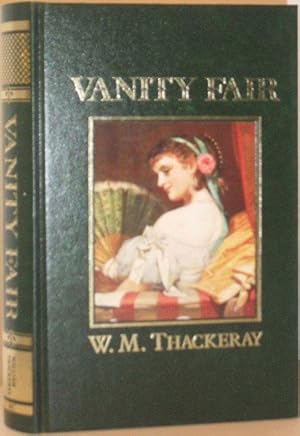
Sexy, clever and ambitious, with a total disregard for convention, she went on to become the nineteenth century’s most notorious adventuress. By the time she died in 1860, (of pneumonia, her lungs fatally weakened by the cigarillos she loved to smoke), only Queen Victoria eclipsed her in fame. Her life gave rise to hundreds of novels and plays and endless gossip. Thackeray probably used her as his model for Becky Sharpe in Vanity Fair. 


With all that, it’s hard to understand why today, Lola has been almost forgotten. Books on her are not easy to track down and the few people who recognize her name usually do so from Vanity Fair or her colourful appearance in George MacDonald Fraser’s Royal Flash, where she was the femme fatale who delivered Flashman into the clutches of the dastardly Otto von Bismarck.

So what happened? The number of Lola’s lovers was legendary but to the straight-laced Victorians, that made her all the more fascinating. Many famous courtesans – Diane de Poitiers, Nell Gwyn, Madame de Pompadour and Mata Hari to name a few - have come down to us in history, why not Lola?

I believe the answer is to be found in other traits in her character. She loved to live on the edge of danger and her restless temperament abhorred compromise. Full of ambition and independence of spirit, she was determined to direct her own life, even if a lover provided the money. Her sexuality was also predatory and couldn’t be contained within the conventionally discreet role of a mistress, let alone the framework of virtuous domesticity. Thus, she was a woman who represented a threat to a male dominated world. Perhaps it was society’s revenge that she should be forgotten.


Cartoon of Lola and Ludwig
  

I spent a long time reading everything and anything I could find about Lola and concluded that my first instinct had been correct: her story would make a great novel. It was such a shame that time had obscured her memory. As I went on, however, I realised that successfully turning fact into fiction was going to be a challenge. Lola packed enough into her forty years to fill several lifetimes. If readers were not to give up, exhausted and bewildered by her whirlwind existence, I had to be extremely selective about the episodes I used, while still constructing a satisfying narrative flow.

The second problem was that although Lola was a charmer if she chose to be, she could also be capricious, selfish and evil-tempered and as her celebrity increased, these qualities came to the fore. My readers didn’t need to like Lola unreservedly – after all many people find heroines like Dickens’s idealized women terribly bland and dull - but I didn’t want to forfeit all sympathy for her. My solution was to focus on the period of her life when she was establishing herself and growing into the persona of Lola. That way, I could write about the feisty, courageous girl who took on the world in her search for happiness and fulfilment, before celebrity devoured her.

Writing Becoming Lola was lots of fun and the interest the book has generated has amply rewarded my efforts. She would be remarkable in any age. In her own she was a phenomenon. I’m glad to have played a part in rehabilitating her memory. 


Contemporary cartoon Lola escaping to France after being charged with bigamy.


To buy a paperback copy or download one on Kindle, tap the cover image in the  sidebar above on the right, or follow the link viewBook.at/lola_

Facebook @ Harriet Steel

Twitter @harrietsteel1.